Tuner Z - Track Days
- 4.1
- Rating
- 50.00K
- Installs
- Free
- Price
 Analysis by App-foxy
I went into Tuner Z - Track Days expecting a straightforward mobile racing game, but its appeal is more specific than simply driving quickly. The game is built around the feeling of preparing a car, taking it onto the track, noticing what went wrong, and trying again with a slightly better approach. That cycle gives it more personality than a basic arcade racer, even though it also asks for more patience than a game designed only for instant thrills.
Developed by Notraction Games, this free racing game presents itself as a car tuning and racing simulator for Android. It is suitable for Everyone, runs on devices using Android 9 or later, and has reached over fifty thousand installs. Those details make it easy to approach, but the simulator label is the more important one: I would not recommend it to someone looking for a purely casual game where every car feels perfect from the first corner.
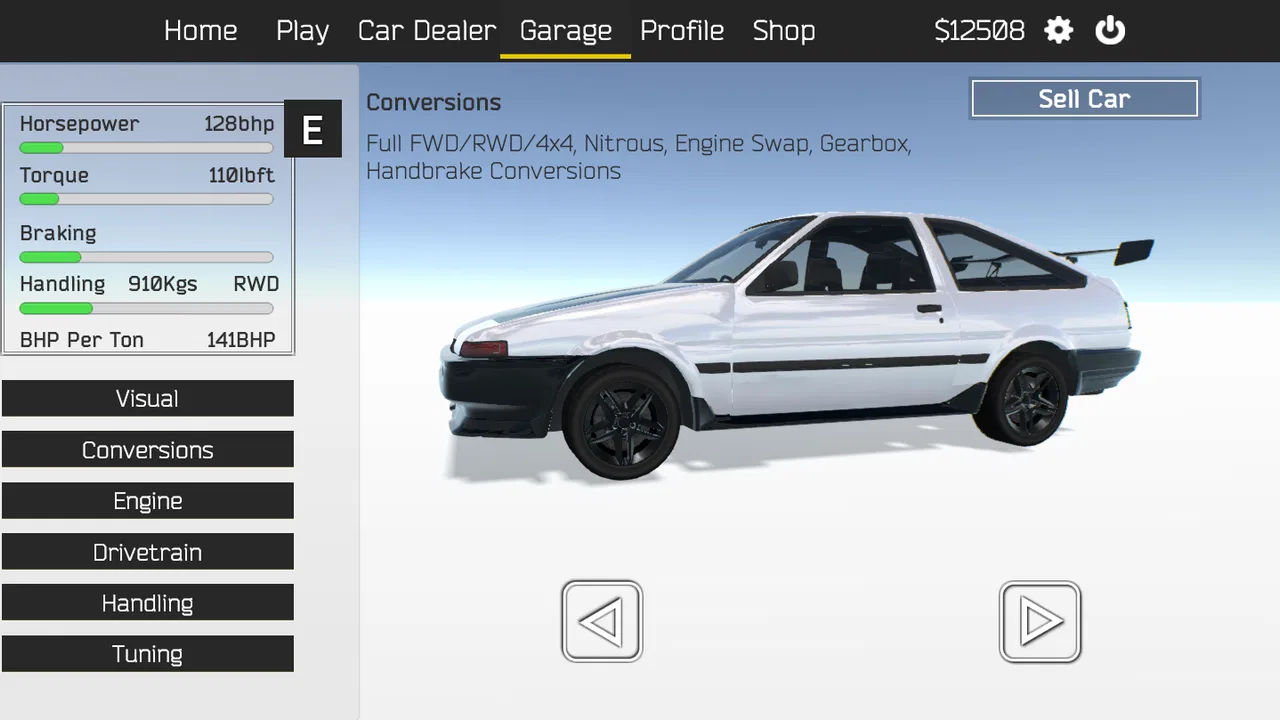
After spending time with it, I see the main attraction in the relationship between adjustment and driving. You are not just selecting a vehicle and watching numbers rise. You are learning how the car responds, deciding whether a change actually helps, and accepting that a faster setup in one situation may create a new problem somewhere else. The fun comes from turning each failed run into useful feedback.
You May Also Like

 Pandora - Music & Podcasts
Pandora’s Music Is Easy to Start, but Harder to Recover
Pandora’s strength is its low-effort path from a seed to a station. Its weak spot is how much confidence it asks you to place in connection, setup, and quiet recovery.

 8 Ball Pool
 Is Built on Rivalries, Rematches, and Routine
A close look at the rivalries, rematches, shared routines, and unanswered safety questions that turn a quick pool match into a persistent mobile community.

 Samsung Music
’s Quiet Strength Is Playing What You Already Own
Its reach comes less from spectacle than from dependable access to a personal library. That simplicity is both the app’s strongest retention engine and its ceiling.

 AccuWeather: Weather Radar
AccuWeather Review: A Quick, Clear Forecast for Everyday Decisions
For everyday plans, the best forecast is the one you can understand quickly. AccuWeather makes rain timing, radar, and local conditions easy to act on, with a few trade-offs.

 Hill Climb Racing
Why Hill Climb Racing Still Turns Crashes Into One More Run
A tiny car, a bumpy hill and one more upgrade: Hill Climb Racing keeps resurfacing because its simple chaos makes every near-miss feel personal.

 AliExpress - Shopping App
AliExpress Makes Global Shopping Feel Personal, but Shoppers Bear the Risk
AliExpress turns a global marketplace into a pocket-sized discovery engine. Its reach is useful, its shopping loop compelling, and its trade-offs easy to miss.
More From Our News Desk
View All News


From the first adjustment to the first clean lap
The first action is simple in concept: choose a car, prepare it, and head out to race. What makes that opening meaningful is that the tuning side is not merely decoration around a conventional racing game. The promise of the experience is to make the car feel like something you are gradually understanding rather than a disposable tool that can be replaced whenever a race becomes difficult.
I found it helpful to resist the temptation to change everything immediately. When several settings are altered at once, it becomes difficult to know which decision improved the car and which one caused a new weakness. A better workflow is to make one deliberate change, drive a short run, and pay attention to a single problem: corner entry, acceleration, stability, or the way the car behaves when I push too hard. That approach turns the tuning screen into a practical learning tool instead of a menu to rush through.
This is also where the game separates itself from familiar arcade alternatives. In an arcade racer, the first question is usually whether I can steer cleanly and use the right boost or shortcut. Here, I am more interested in why the car feels unsettled and whether my next adjustment will make the next attempt more consistent. The reward is not always an obvious victory. Sometimes it is simply reaching a section of the track with fewer corrections than before.
That slower beginning may frustrate players who want a quick race during a short break. The game asks me to observe rather than constantly chase spectacle. If you enjoy experimenting with cars and comparing the result of one setup against another, this creates a strong reason to continue. If you prefer immediate speed, the tuning layer can feel like work before the real game starts.
Why the driving feedback matters more than the first result
The feedback rhythm is the heart of the experience. I make a change, drive, notice the car’s behavior, and return with a more focused idea. That rhythm is satisfying because the game gives each attempt a purpose. Even a poor run can answer a question: did the car become easier to control, did I overcorrect, or was the problem actually my line through the corner?
For me, the most useful habit was separating driver mistakes from setup mistakes. A car that feels difficult may not need more tuning at all; I may simply be entering a corner too quickly or asking for acceleration before the car is settled. Conversely, repeating the same error after several careful driving attempts can indicate that the setup is working against me. This distinction prevents endless menu adjustments and keeps the focus on learning.
Another practical tip is to judge consistency before chasing a personal best. A spectacular run that depends on every corner being perfect tells me less than several controlled runs that behave similarly. Once a setup feels predictable, I can push it harder with confidence. That makes the improvement process feel earned rather than random.
The game’s simulator identity also means that small changes have more value when I pay attention to context. A setup that feels comfortable on one part of a track may not be ideal when the pace changes or when I take a different line. I would therefore avoid treating one successful adjustment as a universal answer. The best setup is the one that matches the way I actually drive, not the one that looks most impressive in a menu.
This feedback loop is especially useful for players who enjoy understanding systems. It gives me a reason to replay the same challenge without making the repetition feel completely empty. At the same time, anyone who dislikes trial and error should know that the game’s appeal depends on accepting imperfect runs. There is no point pretending that every attempt will feel smooth from the outset.
What counts as a reward in this racing simulator
The reward structure is less about a single dramatic payoff and more about accumulating confidence. A cleaner corner, a more stable car, or a run that reaches the difficult section without losing control can be enough to make another attempt worthwhile. I like that this gives progress a personal dimension: the game rewards me for understanding the car, not only for finishing first.
That said, the experience still needs a clear reason to keep tuning. When the setup process works, the reward is immediate because I can feel the difference while driving. When a change is subtle, the benefit can be harder to recognize, and the game may feel less satisfying than a conventional racer with obvious unlocks and constant visual rewards. This is a trade-off rather than a flaw, but it defines the audience very clearly.
I would recommend treating the tuning process as a series of small experiments. Before a run, decide what you want to learn. During the run, focus on the chosen issue instead of judging the entire car. Afterward, keep the change only if it solves the problem without creating a larger one. This method prevents the common mistake of chasing every possible improvement at once.
There is also a useful emotional reward in recovering from a bad attempt. I may begin a session feeling that the car is simply too difficult, then discover that a calmer entry or a modest adjustment changes the whole run. That turnaround is more memorable to me than an effortless win. It is the reason the game can hold attention even when it is not offering the broadest selection of arcade-style distractions.
Players should also keep the free-to-play structure in mind. The game is free to download and includes in-app purchases ranging from $1.49 to $10.99 per item. I would approach those purchases as optional convenience rather than part of the basic reason to try the game. The important question is whether the driving and tuning loop already interests you without spending money. If it does not, purchasing something is unlikely to fix that mismatch.
The reset after a run is part of the design
The session reset is where many racing games either lose me or pull me back in. In this case, restarting makes sense because a run gives me information that I can use immediately. I am not simply repeating the same race in the hope that luck will improve. I am returning with a new decision, whether that means changing the car, choosing a different driving approach, or keeping the setup and concentrating on execution.
I found it useful to pause after a failed attempt instead of resetting automatically. A quick mental note about the first moment the car became unstable is more valuable than an emotional reaction to the final result. Was the problem present from the start, or did it appear only after I pushed through a particular section? That small pause makes the next attempt more intentional.
The reset also creates a natural stopping point for short sessions. I can complete a few focused runs, make one meaningful adjustment, and leave without feeling that I abandoned a complicated campaign. On the other hand, the same structure can become repetitive if I do not set a clear goal. Without a question to answer, the loop risks becoming “drive, fail, restart” rather than genuine progress.
This is why I would not describe the game as an ideal choice for everyone. Players who want a large career mode, a constant stream of dramatic events, or a social racing environment may prefer a more traditional racing title. Tuner Z - Track Days is more appealing when the act of refining a car is itself the content. It is a focused experience, and its narrower purpose is both its strength and its limitation.
Device compatibility is straightforward for newer Android users because the minimum requirement is Android 9. The game’s Everyone rating also makes it approachable for a broad audience, although the simulator-style learning curve may be more relevant to suitability than the age label. A younger or less patient player may understand the controls quickly but still find the repeated tuning and testing less exciting than an arcade game.
How it compares with ordinary racing alternatives
Compared with an arcade racer, this game gives up some immediate accessibility in exchange for a stronger sense of cause and effect. Arcade games are usually better when I want a quick burst of speed, forgiving handling, and obvious rewards after every race. Tuner Z - Track Days is better when I want to ask why the car behaves a certain way and then test an answer.
Compared with a large, presentation-heavy racing game, it feels more focused on the individual car and the driving experiment. I do not approach it for a huge collection of distractions. I approach it for the repeated process of preparing, driving, evaluating, and refining. That makes it a good companion for someone who enjoys garage-style tinkering, while a player seeking broad variety may find the scope too concentrated.
It also differs from a purely realistic simulator in an important practical way: it is easier to pick up during an ordinary mobile gaming session. I can use a few attempts to explore a setup without committing to a long play period. Still, the game does not remove the need for attention. If I play carelessly, the tuning systems cannot compensate for poor decisions behind the wheel.
One of the less obvious trade-offs is that the game can make me more analytical but also more self-critical. When a run fails, I have fewer excuses because the whole point is to understand what happened. That is rewarding for a thoughtful player, but tiring for someone who wants the game to smooth over mistakes. Knowing which type of player you are matters more here than the free price.
Who should install it, and who should skip it
I think it is a good fit for players who enjoy car setup, repeatable track challenges, and gradual improvement. It is also suitable for someone who likes mobile games that can be played in short bursts but still offer depth when they have more time. The free entry point makes it reasonable to test the central loop without making a commitment first.
I would skip it if my main goal were licensed-car collecting, spectacular presentation, multiplayer competition, or effortless arcade action. I would also be cautious if I tend to change every setting after every mistake. The game rewards controlled experimentation, so chaotic adjustments can make it feel confusing even when the underlying idea is working well.
The developer, Notraction Games, has positioned the project around tuning and track driving rather than a broad all-purpose racing package. Its current version is 0.9.6.4.9, and the game has earned a 4.1 average from over six hundred ratings. That response suggests a solid level of interest, but I would still judge it by the loop itself: the rating matters less than whether you enjoy learning a car through repeated attempts.
For an everyday scenario, imagine having fifteen minutes before leaving home. I would start by choosing one handling issue, make a single adjustment, and run the track without trying to set a perfect time. If the car feels better, I would repeat the same route to check whether the improvement is consistent. If it feels worse, I would undo the change rather than piling on another one. That gives the short session a beginning, a test, and a useful conclusion.
My verdict on the action-feedback-restart loop
What keeps me returning is the clean logic of the loop: act on the car, receive feedback from the track, earn confidence through improvement, reset with a better question, and try again. The game does not need to make every attempt spectacular because the next session has a purpose. I am either testing a setup, confirming a result, or correcting a mistake.
Its limitations are equally clear. The tuning focus can feel demanding, repetition can lose its charm without a personal goal, and players expecting a conventional arcade racer may find the pace too deliberate. The in-app purchase range from $1.49 to $10.99 per item is another reason I would first decide whether the core driving is enjoyable on its own.
Overall, I recommend Tuner Z - Track Days to anyone who wants a free Android racing game with a more hands-on relationship between car preparation and track performance. I would not recommend it as a universal racing pick, but that is not what makes it interesting. Its best quality is the feeling that each restart can teach me something, and that a better run comes from a better decision rather than simple repetition.
If you like adjusting, testing, and gradually making a car feel more predictable, this is worth trying. Start slowly, change one thing at a time, and judge consistency before speed. If you follow that approach, the game’s central loop becomes clear: the real reward is not only finishing faster, but knowing exactly why the car improved.
FAQs for Tuner Z - Track Days
01What is Tuner Z - Track Days?
Tuner Z - Track Days is a car-focused game built around tuning, customization, and track driving. It is aimed at players who enjoy modifying vehicles and testing their setups in performance-oriented events. Rather than being only a simple arcade racer, the experience places attention on how upgrades, appearance, and driving style work together while you progress through different challenges.
02Can I customize and upgrade cars in Tuner Z - Track Days?
Yes, customization is one of the main attractions of Tuner Z - Track Days. Players can generally adjust the look of their cars and improve performance through available tuning options and upgrades. The appeal comes from experimenting with different setups instead of using one universal configuration. Before downloading, keep in mind that the exact depth of customization and the availability of certain parts may depend on progression or in-game requirements.
03Is Tuner Z - Track Days suitable for beginners?
The game can be enjoyed by newcomers, especially those who like cars but do not have much experience with racing simulators. However, players may need some time to understand braking, cornering, acceleration, and the effect of tuning changes on handling. Early practice is useful because a fast-looking setup is not always the easiest to control. Patience will help beginners get more from the driving experience.
04Does Tuner Z - Track Days require an internet connection?
Connection requirements can vary depending on the version installed and the features being used. Basic driving or progression may be available in some offline situations, while online services, advertisements, updates, leaderboards, or other connected features may require internet access. We recommend checking the current store listing and the permissions shown on your device before downloading, particularly if you plan to play while traveling or with limited mobile data.
05Is Tuner Z - Track Days free to download and play?
Tuner Z - Track Days may be offered as a free download, but the overall experience can include optional advertisements, in-app purchases, or progression systems that affect how quickly content and upgrades are unlocked. These elements do not necessarily prevent casual play, although players who want every customization option immediately may encounter additional costs. Review the store price, purchase details, and recent user feedback before installing.
Pros
- Accurate lap timing helps compare performance across different track sessions.
- Supports detailed session tracking for analyzing driving progress over time.
- Useful for both casual track days and more structured motorsport practice.
- Clean interface makes essential timing data easy to find while driving.
- Can help organize track-day records without relying on paper notes.
Cons
- Some advanced features may require a paid upgrade or subscription.
- GPS accuracy can vary depending on the device and track conditions.
- Battery usage may increase during long sessions with location services enabled.
- Initial setup can take time if you need to configure tracks and sessions.
- Not a replacement for professional timing equipment at competitive events.

Tuner Z - Track Days
Gallery